
10 Proven Digital Marketing Strategies to Grow Your Small Business in 2026
Running a small business in 2026 means competing against brands with bigger budgets, larger teams, and more resources. Sound familiar? Here’s the truth most marketing gurus won’t tell you: you don’t need a massive budget to win online. You need the right strategies — executed consistently.
Introduction
According to HubSpot, 61% of marketers say generating traffic and leads is their top challenge. For small businesses, that number feels even heavier when every marketing dollar has to count.
This guide breaks down 10 proven digital marketing strategies that small business owners are using right now to attract qualified leads, convert visitors into customers, and grow revenue — without burning through their budget. Whether you're a brick-and-mortar shop in Queens or an e-commerce brand selling nationwide, these tactics apply to you.
1. Build a Fast, Mobile-Optimized Website
Your website is your most important digital asset. According to Google, 53% of mobile users abandon a site that takes more than 3 seconds to load. If your site is slow, outdated, or hard to navigate on a phone, you’re losing customers before they even see what you offer.
A great small business website should load in under 2 seconds, be fully responsive on all devices, have clear calls-to-action on every page, include your contact information prominently, and use HTTPS for security and trust.
Common mistake: Many small businesses treat their website as a one-time project. In reality, it requires regular updates, speed optimization, and content additions to stay competitive.
2. Invest in Local SEO
Local SEO is the process of optimizing your online presence so people nearby can find your business. For a Queens plumber, Brooklyn restaurant, or Manhattan law firm, showing up on the first page of Google when someone searches “near me” is priceless.
Key local SEO actions include optimizing your Google Business Profile, building consistent citations (NAP: Name, Address, Phone) across directories, creating locally-focused content, and earning quality backlinks from local sources.
Expert tip: Target long-tail local keywords like “best web design company in Queens NY” instead of just “web design.” They’re easier to rank for and attract buyers who are ready to convert.
3. Claim and Optimize Your Google Business Profile
Google Business Profile (formerly Google My Business) is the single most powerful free tool for local businesses. Businesses with complete GBP listings are 70% more likely to attract location visits, according to Google’s own data.
Optimize your profile by adding high-quality photos, writing a keyword-rich business description, posting weekly updates, responding to every review (positive and negative), and keeping your hours accurate.
Businesses that respond to reviews are rated 1.7x higher on trust than those who don’t.
4. Create High-Value Content Consistently
Content marketing generates 3x more leads than outbound marketing and costs 62% less, according to Demand Metric. That’s a staggering ROI for a small business.
Effective content includes blog posts answering your customers’ most common questions, how-to guides and tutorials, before-and-after case studies, and FAQ pages targeting informational searches.
Don’t just write content — write content with purpose. Every piece should target a keyword your ideal customer is searching for.
5. Run Targeted Google Ads
Google Ads put your business at the top of search results immediately. Unlike SEO (which takes time), PPC delivers fast results. The key is targeting the right keywords and writing ads that speak directly to your ideal customer’s pain points.
Start with a focused budget of $500–$1,500/month, target buyer-intent keywords (like “hire web designer Queens NY”), and build dedicated landing pages — not your homepage — for each campaign.
Common mistake: Sending ad traffic to your homepage instead of a custom landing page. A targeted landing page can increase conversions by 150%.
6. Leverage Social Media Marketing
Your customers are spending 2.5 hours per day on social media platforms. That’s prime real estate for your brand. But random posting won’t cut it — you need a strategy.
Choose 2–3 platforms where your audience actually hangs out. For B2B, LinkedIn is gold. For B2C, Instagram and Facebook dominate. For restaurants and home services, TikTok and Instagram Reels are growing fast.
Post consistently (minimum 3–5 times/week), mix educational and promotional content at an 80/20 ratio, and engage with your followers by responding to comments and messages within 24 hours.
7. Use Email Marketing to Nurture Leads
Email marketing delivers an average ROI of $42 for every $1 spent — the highest of any digital marketing channel. It’s also one of the most underused strategies among small businesses.
Build your list by offering lead magnets (free guides, discount codes, checklists), then send consistent value-packed emails: weekly tips, promotions, case studies, and service spotlights.
Segment your list based on where leads are in the buying journey. A new subscriber needs education; a warm lead needs social proof and a clear CTA.
8. Launch Meta Ads (Facebook & Instagram)
Meta Ads reach over 3.2 billion people globally and offer laser-precise targeting by location, demographics, interests, and behaviors. For a local business in New York, you can target people within 10 miles of your location who have specific interests relevant to your service.
Start with retargeting ads — showing ads to people who already visited your website. These warm audiences convert at 3–5x the rate of cold traffic.
Allocate 10–15% of your marketing budget to Meta Ads for consistent brand visibility and lead generation.
9. Focus on Online Reviews and Reputation
88% of consumers trust online reviews as much as personal recommendations. Your star rating on Google, Yelp, and Facebook directly impacts how many customers call you.
Actively ask happy customers for reviews (send a text or email with a direct link). Respond professionally to negative reviews without being defensive. Address the issue publicly and take the conversation offline.
A steady stream of 5-star reviews is one of the most powerful (and free) marketing tools available.
10. Track Everything with Analytics
You can’t improve what you don’t measure. Set up Google Analytics 4 and Google Search Console on your website immediately. Track which pages get the most traffic, where visitors drop off, what keywords bring people to your site, and which marketing channels generate the most leads.
Review your analytics monthly and use the data to double down on what’s working and cut what isn’t. Data-driven decisions separate growing businesses from stagnant ones.
Conclusion
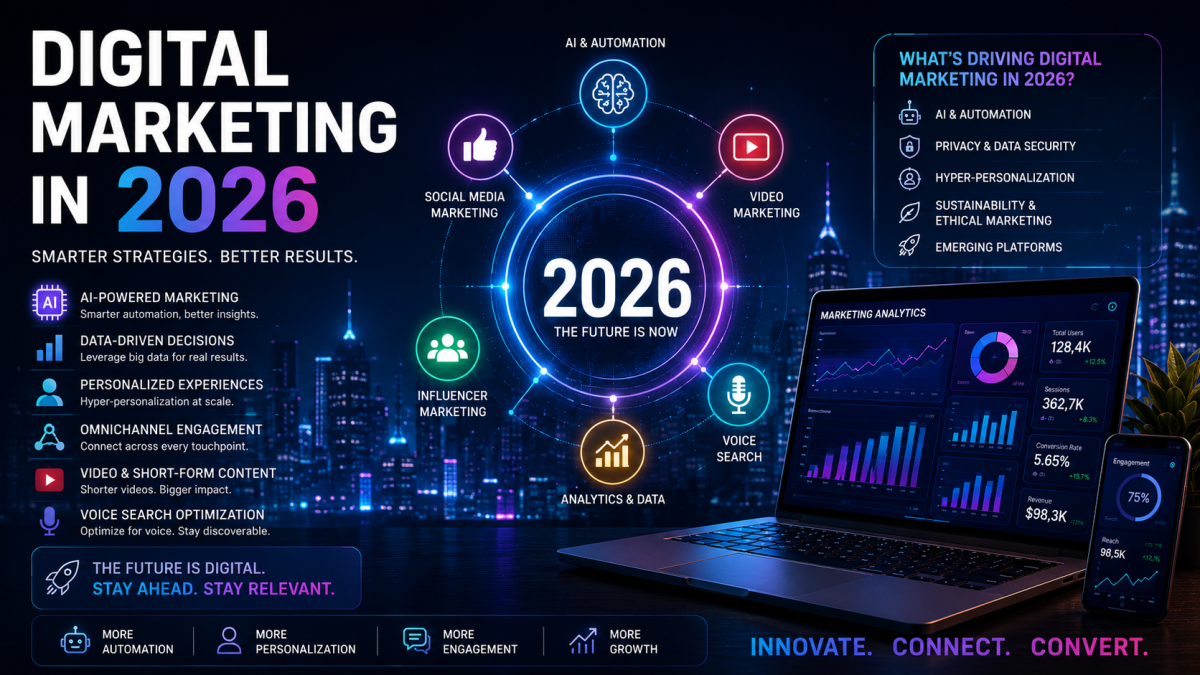
Digital marketing in 2026 rewards businesses that show up consistently, provide genuine value, and build real relationships with their customers online. You don't need every strategy at once — start with 2–3 that fit your goals and budget, execute them well, and expand from there.
Media Work Designs helps small businesses across New York and beyond build powerful digital marketing engines that generate leads on autopilot. Ready to grow? Contact us today for a free marketing consultation.